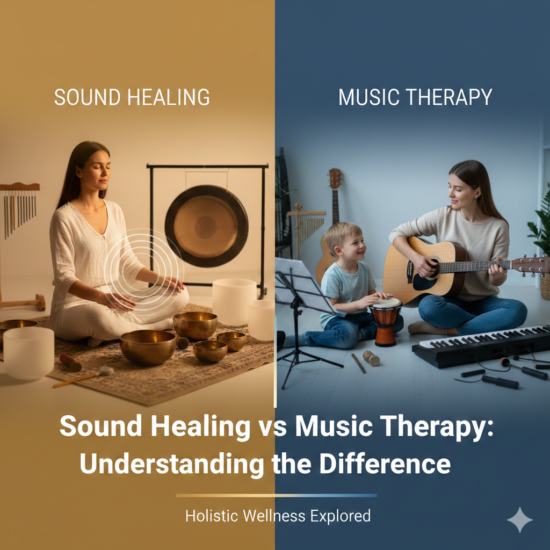
Sound healing and music therapy are often mentioned together, but they are not the same practice. While both use sound, their purpose and approach differ.
To understand how these approaches differ, it is helpful to begin with how sound healing works and how it is typically experienced in wellness settings.
Sound Healing Explained
Sound healing focuses on relaxation, meditation, and energetic balance. Sessions usually involve listening to instruments or tones without the need for active participation. The experience is inward-focused, allowing the listener to rest and observe sensations.
What Is Music Therapy?
Music therapy is a structured clinical practice led by trained professionals. It may involve singing, playing instruments, or listening to music with specific therapeutic goals. Music therapy is often used in healthcare and rehabilitation settings.
Key Differences
Sound healing is typically holistic and experiential, while music therapy is goal-oriented and evidence-based within clinical frameworks. Sound healing does not diagnose or treat conditions, whereas music therapy works within therapeutic plans.
While both practices use sound, the mental and emotional benefits of sound vary depending on intention, structure, and guidance.
Choosing the Right Approach
Both practices can be valuable depending on individual needs. Sound healing suits those seeking relaxation and self-exploration, while music therapy is appropriate for structured therapeutic support.
Some people who resonate with experiential sound practices eventually explore guided sound experiences that focus on relaxation and awareness.
About The Author